Driveways built to carry the weight.
Paver and natural stone driveways that carry vehicle traffic without cracking, heaving, or fading.
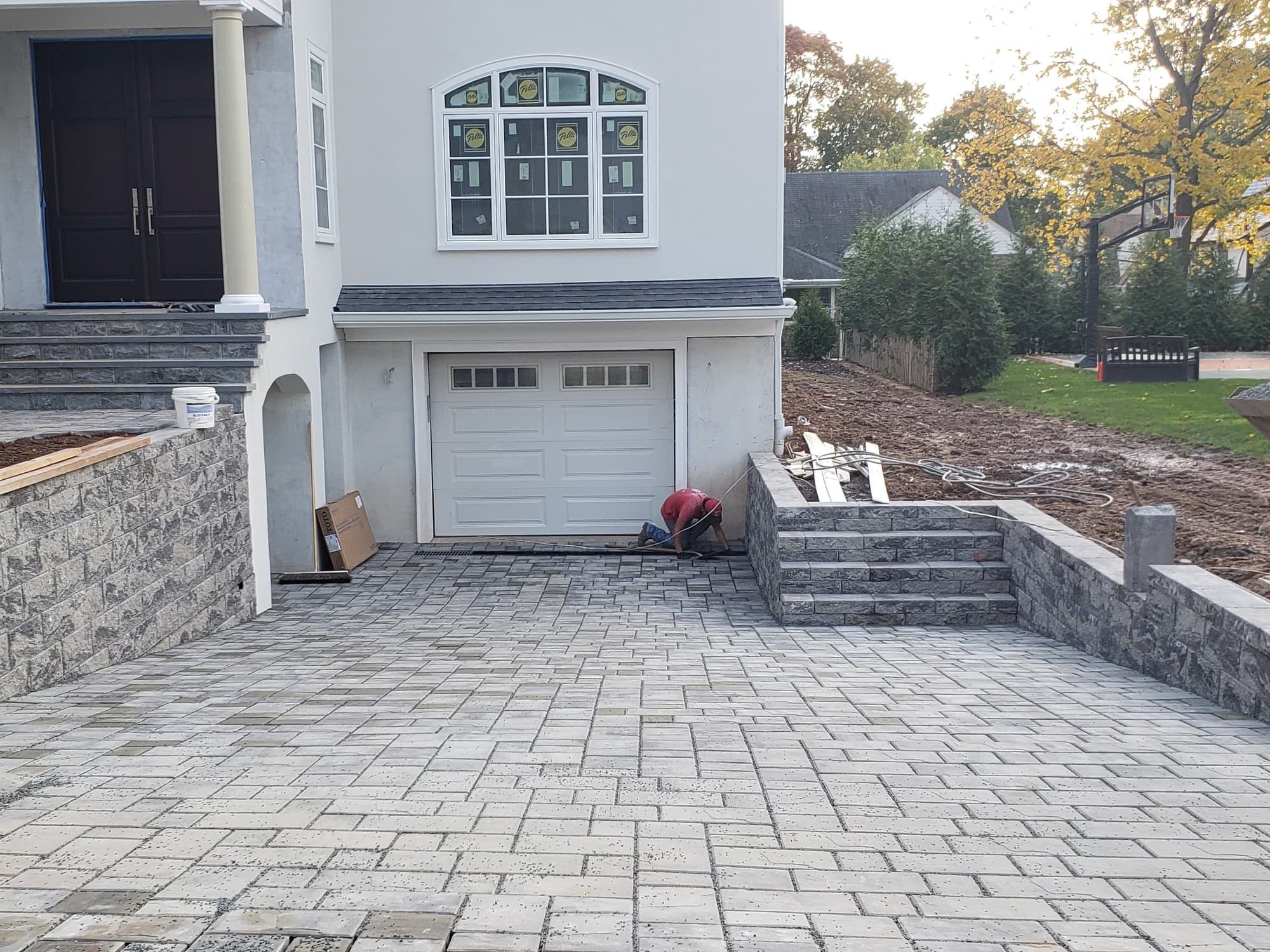
Why pavers over asphalt
They move with the ground
Individual units flex through freeze-thaw cycles instead of cracking the way a single slab does.
They can be repaired
A single paver can be lifted and replaced if it is ever needed. No patches, no visible seams.
They keep their color
Pavers and stone do not fade to gray or need regular resealing to look finished.
A driveway is only as good as its base.
The surface gets the attention. The base does the work.
Excavate
We dig out to make room for a full base, not a skim coat over what is already there.
Build and compact the base
A properly excavated and compacted base, built to handle New Jersey freeze-thaw cycles.
Pitch it for water
The surface is graded so water runs off and away from the garage and the house.
Lay, edge, and lock
Pavers set in pattern, edges restrained, joints filled so the whole field locks together.
Common questions
No. We work exclusively with pavers and natural stone, which last longer, look better, and are easier to repair than asphalt.
With proper base preparation and installation, a paver driveway can last decades. Individual pavers can be lifted and replaced if ever needed.
Yes. The base carries the load. That is why we excavate and compact it for vehicles rather than treating a driveway like a patio.
Tell us about your project.
Send a few details and we will set up a site visit.